
Photographer in Oslo – Professional photographer for businesses
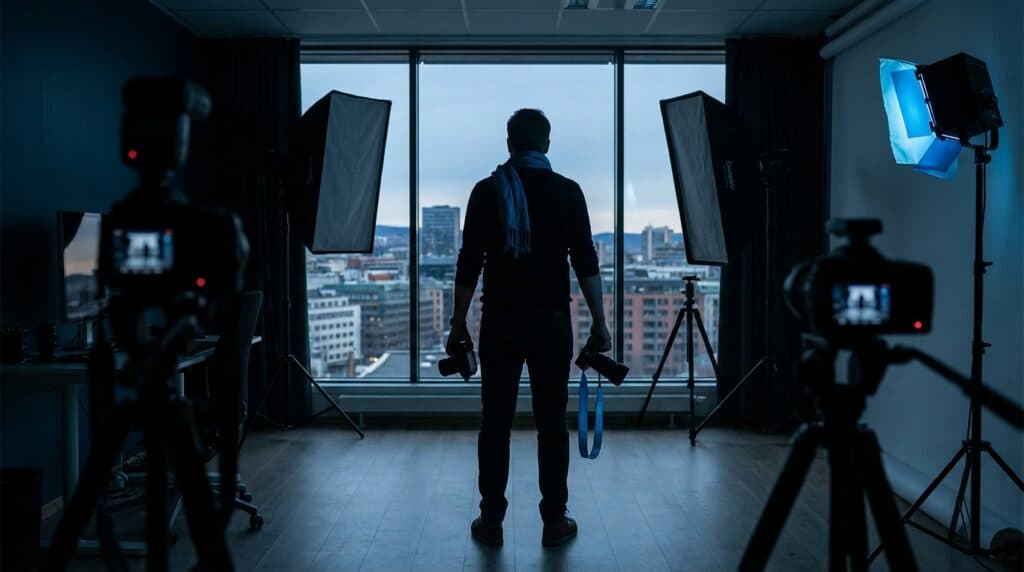
Why choose a professional photographer in Oslo for your business
Your business has likely invested significant resources in product development, marketing and customer service. But what about your visual identity? Images communicate faster than text, and in a digital world where attention spans are limited, professional photographs can be the difference between being remembered or forgotten. A professional photographer in Oslo can help your business create a visual language that reflects who you are and what you stand for.
Oslo offers unique opportunities for corporate photography. From modern office buildings in Bjørvika to historic façades in Grünerløkka, the capital provides a varied palette of backdrops and atmospheres. A local photographer knows these locations and understands how the light falls throughout the year, which times of day yield the best results, and how to avoid crowds at popular spots.
Professional corporate photography isn’t just about aesthetics. It builds trust with potential customers, strengthens the brand both internally and externally, and provides the marketing department with material that actually works. Companies that invest in quality photography often report higher engagement on social media, better conversion rates on their website, and a more cohesive visual identity.
Strengthen your brand with visual storytelling
Every business has a story. Perhaps you started out in a garage, or perhaps you represent the third generation of a family business. Whatever your background, this story deserves to be told visually. Professional photography is about more than just documentation; it’s about conveying values, culture and personality through images.
Visual storytelling creates emotional connections with your target audience. When potential customers see real people in authentic work situations, trust is built in a way that stock photos can never achieve. An experienced photographer knows how to capture these moments without it feeling staged or artificial.
Think about how images are used in recruitment. Candidates considering a role will often check the company’s website and social media. Professional images of the working environment, the team and the office premises give an impression of the culture and can be decisive in whether they apply or not. Here, the photographer plays a vital role in highlighting what makes the workplace attractive.
Local expertise and knowledge of Oslo as a location
A photographer based in Oslo possesses knowledge that is difficult to acquire in a short time. They know that Aker Brygge looks its best in the evening light, that the Opera House roof offers stunning reflections after rain, and that Grønland provides colourful backdrops for more informal photos. This local knowledge saves time and ensures better results.
Seasonal variations also play a part. Oslo in December, with snow and Christmas lights, offers completely different possibilities than a summer’s day in June. A local photographer plans with this in mind and can suggest times and locations based on what the company wishes to convey. Should the images radiate warmth and intimacy, or professionalism and precision?
Practical considerations such as parking facilities, access to power for lighting, and knowledge of local regulations for photography in public places are also advantages that an Oslo-based photographer brings to the table. This makes the whole process smoother and reduces the risk of unforeseen problems on the day of the shoot.
Corporate photography services
Corporate photography covers a wide range of needs. From executive portraits to documentation of large events, there are specialised services for various purposes. Understanding which types of photography are relevant to your business is the first step towards choosing the right photographer and planning effectively.
Portraits and staff photos for websites and LinkedIn
Staff portraits are often the first impression potential clients have of the people behind the company. A professional portrait conveys competence and credibility, whilst an amateurish photo can create the opposite impression. LinkedIn profiles with professional photos receive significantly more attention than those with selfies or no photo at all.
A good portrait photographer creates a relaxed atmosphere where the subject feels at ease. Not everyone is used to being in front of a camera, and the ability to bring out natural expressions is a skill that sets the best photographers apart from the rest. The result is photos where the subject’s personality shines through.
Consistency is key when photographing the whole team. A uniform background, lighting and style create a cohesive look on the website. Many companies choose to combine formal portraits with more informal photos that showcase personality and the working environment.
Images of office spaces and the working environment
Office photos tell the story of how the company works. Are there open-plan offices with cross-departmental collaboration? Quiet rooms for focused work? Modern meeting rooms equipped with technology? These photos give potential clients and employees an insight into everyday life.
Photographing office spaces requires planning. Tidy desks, good lighting and the right angles make a big difference. An experienced photographer knows how to make even small spaces look inviting, and how to avoid common pitfalls such as reflections in windows or screens.
Authenticity is key. The photos should show real work situations, not staged scenes where everyone is smiling at the camera. The best office photos capture moments of collaboration, concentration and creativity in a natural way.
Event photography for conferences and seminars
Corporate events represent a significant investment of time and resources. Professional documentation ensures that the value of the event lives on long after the participants have gone home. The photos can be used afterwards for marketing, internal communication and as documentation for future events.
Event photography requires specific skills. The photographer must be able to work discreetly without disrupting the programme, handle varying lighting conditions, and capture speakers, the audience and networking moments. Quick reflexes are essential to ensure that no important moments are missed.
Planning with the organiser in advance ensures that the photographer knows which moments are most important to document. Is there an awards ceremony? An important announcement? The signing of an agreement? Such moments require the photographer to be in the right place at the right time.
Product photography and commercial images
For businesses selling physical products, product photography is an investment that pays for itself many times over. High-quality images increase conversion rates in online shops and create a professional impression in catalogues and marketing materials.
Product photography can be done in a studio with controlled lighting, or on location to show the product in use. The choice depends on the type of product and how the images will be used. An experienced product photographer will advise on what works best for your specific needs.
Details are crucial. The right angle, lighting that highlights textures and materials, and accurate colour reproduction require both technical expertise and an aesthetic eye. Poor product images can make even high-quality products look cheap.
How to plan a successful photo shoot
Good planning is half the battle. A thoroughly prepared photo shoot yields better results and makes more efficient use of time. Here are the key aspects to consider before the day of the shoot.
Define your company’s visual style
Before contacting a photographer, you should have a clear idea of the style you want. Should the images be formal and professional, or warm and personal? Modern and minimalist, or classic and timeless? Collecting examples of images you like gives the photographer a good starting point.
Also consider how the photos will be used. Photos for a website have different requirements than those for large-format prints or social media. Formats, resolution and cropping should be discussed in advance to ensure the photographer delivers material that meets all your needs.
Brand guidelines come into play if the company has defined colours, fonts and a visual identity. The images should harmonise with the existing look and feel, not clash with it. Feel free to share the brand manual with the photographer so they understand the context.
Choosing the right location in Oslo
Oslo offers a wide variety of locations for corporate photography. The choice should reflect the company’s identity and the message you wish to convey. A technology company might benefit from the modern architecture in Bjørvika, whilst a creative business might prefer the more informal surroundings of Grünerløkka.
Indoors versus outdoors is an important decision. Outdoor photography offers natural light and variety, but is dependent on the weather. Indoors offers more control, but often requires additional lighting. Many opt for a combination to achieve varied images.
Logistics must also be considered. Is the location easily accessible for everyone to be photographed? Is there space for equipment and, if necessary, make-up and a changing room? Do you need permission to photograph there? These practical matters should be clarified well in advance.
The value of professional post-processing and editing
The raw images from a photo shoot are just the beginning. Professional post-processing takes the images to a whole new level. Colour correction, exposure adjustment, retouching and cropping are all steps that require expertise and time.
Post-processing is not about manipulating reality, but about bringing out the best in every image. Small adjustments to contrast and colour balance can make a big difference to the overall impression. Professional photographers have an eye for details that amateurs often overlook.
Consistent post-processing ensures that all the images from a photo shoot have the same style and mood. This is particularly important when the images are to be used together on a website or in a brochure. Inconsistent images create a messy impression.
Delivery format and resolution should be discussed in advance. Images for the web require different specifications to those for print. A professional photographer will deliver material in formats that meet all your needs, often including both high-resolution original files and web-optimised versions.
How to find the right photographer for your project
Choosing a photographer is an important decision. The right photographer understands your business’s needs, communicates effectively throughout the process, and delivers results that exceed expectations. Here’s what you should look for.
Assessing the portfolio and previous references
The portfolio is the most important tool for assessing a photographer. Look for work that resembles what you want, whether it’s portrait photography, event documentation or product shots. The quality should be consistent throughout the portfolio, not just in a few selected highlights.
Style is personal, and it is important that the photographer’s aesthetic preferences match what your business is looking for. Some photographers have a distinctive style that is easily recognisable, whilst others are more flexible. Both approaches can work, depending on your needs.
References from previous clients provide valuable insight into what it is like to work with the photographer. Were they punctual and professional? Did they communicate well? Did they deliver as agreed? Such experiences from other businesses can be decisive for your choice.
Pricing models and image usage rights
Photographers operate with different pricing models. Some charge by the hour, others by the day, and some offer packages for specific services. Make sure you understand what is included, such as the number of fully edited images, delivery time and any additional costs.
Image rights are an important issue that is often overlooked. Who owns the images after delivery? Can the company use them freely in all marketing, or are there restrictions? Can the photographer use the images in their own portfolio? These questions should be clarified in writing before the assignment begins.
A good photographer is transparent about their terms and takes the time to explain what you can expect. If anything is unclear, do not hesitate to ask questions. A good working relationship is built on mutual understanding and clear expectations from both parties.
Professional corporate photography is an investment that pays dividends over time. The images are used on the website, on social media, in recruitment, in presentations and in marketing materials. High-quality images remain relevant for years and give the company a competitive edge in a visual world.
Would you like help strengthening your company’s visual profile? Mediabooster works as a partner and colleague, not just an external supplier. With experience from over 450 web and marketing solutions in Scandinavia, they can help you with everything from strategy to implementation. Book a meeting to discuss how you can take your company’s visual communication to the next level.