
Photographer in Oslo for corporate photography and marketing
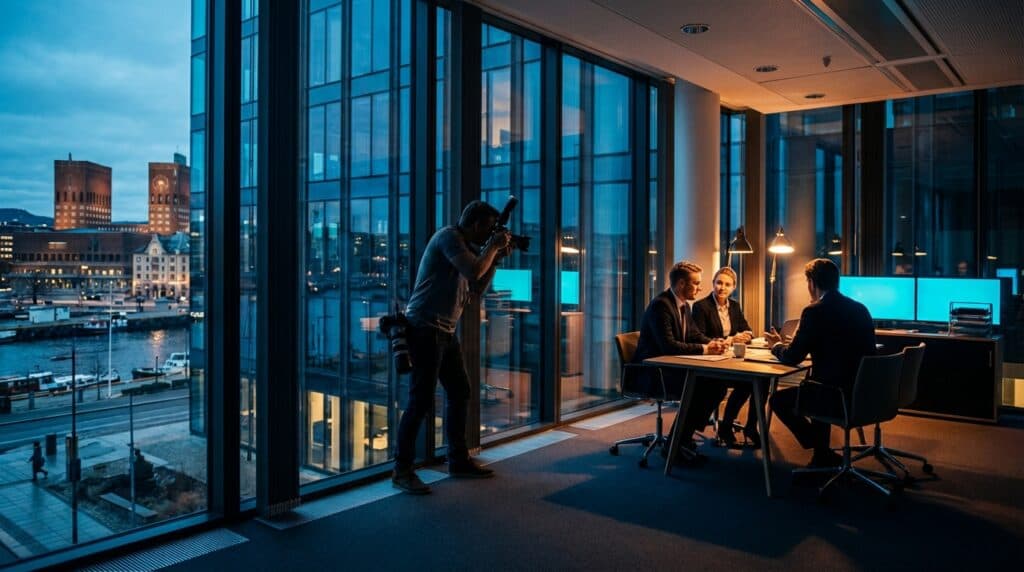
Businesses in Oslo compete for attention in a market where first impressions are often formed through images. A potential customer spends a fraction of a second deciding whether to engage further with your brand, and the visual material you present often determines the outcome. That is why choosing a photographer in Oslo for corporate photography and marketing is about far more than just getting someone to press the shutter button. It’s about communicating who you are, what you stand for, and why someone should choose you specifically. Professional images build credibility in a way that stock photos never can. They tell the story of your business with authenticity and precision.
Why choose a professional corporate photographer in Oslo
Oslo offers unique opportunities for corporate photography that few other cities can match. The combination of urban architecture, green spaces and fjord landscapes provides a variety of backdrops that can be tailored to different brands and messages. An experienced photographer in Oslo is familiar with these opportunities and knows how to utilise them to create images that stand out.
Professional corporate photographers bring more than just technical expertise to the table. They understand how light, composition and colour palettes influence how your brand is perceived. An amateur can take a sharp photo, but a professional creates an image that communicates.
Local knowledge of locations and lighting conditions
Oslo has distinctive lighting conditions that vary dramatically throughout the year. The winter months provide soft, diffused light that works excellently for portraits, whilst summer offers long evenings with golden sunlight. A photographer who knows the city knows when Aker Brygge is bathed in perfect afternoon light, or when the streets of Grünerløkka provide the urban atmosphere you’re looking for.
The choice of location also affects the logistics. Some places require permits, others have limited access at certain times. A local photographer often has established relationships with venue owners and is familiar with the practical challenges of different locations.
Build trust through visual storytelling
People trust what they can see. When potential customers visit your website and encounter professional images of real people in real work situations, a connection is created that generic stock images can never establish. This trust is particularly important for service-based businesses where customers are buying expertise and relationships.
Visual storytelling is about showing, not telling. Instead of writing that you have a dedicated team, you show it through images of colleagues working together. Instead of claiming that you deliver quality, you demonstrate it through images of the work process.
Portrait photos that strengthen employees’ profiles
Employee portraits are the cornerstone of a company’s visual identity. They are used on the website, in email signatures, on LinkedIn, in presentations and in press materials. Good portraits make employees recognisable and approachable, which lowers the barrier to contact.
Classic studio shots vs. environmental portraits
Studio photos with a neutral background create a clean, professional look that works well across platforms. They are timeless and easy to update as the team grows. The downside is that they can come across as impersonal and indistinguishable from everyone else’s.
Environmental portraits, taken on the company’s premises or at relevant locations, add personality and context. A lawyer photographed in front of a bookshelf, a chef in the kitchen, or an IT consultant at their workstation: these images reveal more about the person and their role. Many companies opt for a combination, using both classic portraits for formal purposes and environmental shots for more informal channels.
How to prepare your staff for the photo shoot
Preparation is the key to successful portrait photos. Send out information well in advance about what kind of clothing works best. Generally, you should avoid bold patterns and choose solid colours that match the company’s visual identity. White can be challenging due to reflections, whilst dark blue and grey often work well.
Encourage staff to get a good night’s sleep before the shoot and avoid too much alcohol the night before. Small details such as well-groomed hands and clean glasses make all the difference. Ensure there is access to a mirror and basic make-up for touch-ups during the session. Some companies book a professional make-up artist for the day, which can significantly enhance the result.
Visual content for digital marketing
Images are the fuel of modern digital marketing. From social media ads to blog posts and newsletters: high-quality images boost engagement and conversion rates. Studies show that content with relevant images receives 94 per cent more views than content without.
Images tailored for social media
Each platform has its own requirements and expectations. Instagram favours square or vertical images with high visual appeal. LinkedIn users respond to professional images that demonstrate expertise and credibility. Facebook allows for more informal content, whilst TikTok and Reels require a vertical format suited to mobile screens.
An experienced corporate photographer delivers images in multiple formats and crops, ensuring you have material ready for all channels. It is far more efficient to plan this during the actual shoot than to try to adapt images afterwards.
Optimising images for websites and SEO
Image quality affects both user experience and search engine rankings. Large, uncompressed images slow down the website, which penalises you in Google searches and frustrates visitors. Professional photographers deliver images in web-optimised formats with the correct compression.
Alt text is another important factor. These texts describe the images for search engines and screen readers. When you receive the images, you should create descriptive alt texts that naturally include relevant keywords. “The team at [Company Name] in a meeting at the Oslo office” is far better than “image1.jpg”.
Event photography and documentation of corporate culture
Events and everyday situations offer unique opportunities for authentic content. These images show the company in action and provide an insight into the culture in a way that staged photos rarely achieve.
Capture moments from conferences and seminars
Event photography requires a different approach to studio photography. The photographer must be discreet enough not to disturb, yet present enough to capture the key moments. Good event photos include:
- Speakers in action with an engaged audience
- Networking and informal conversations
- Details such as name badges, decorations and food
- Group photos of participants
- Reactions and interaction
Plan with the photographer in advance. Identify key moments that need to be captured, and provide the photographer with a list of VIPs to prioritise. Ensure the photographer has access to all relevant areas.
Photos showing everyday life at the company
Documenting everyday life provides material that can be used for recruitment, employer branding and internal communication. These photos show what it’s actually like to work at your company: colleagues working together, lunch in the canteen, celebrations of milestones, and focused work.
Authenticity is key here. Staged “spontaneous” photos often look stiff and unnatural. A skilled photographer knows how to get people to relax and behave naturally in front of the camera. Sometimes it’s simply a matter of letting the camera roll whilst people forget they’re being photographed.
Product photography for Oslo-based businesses
Product images are crucial for e-commerce and the marketing of physical goods. The quality of product images directly affects the conversion rate. Customers cannot touch the products online, so the images must compensate for this by clearly showing details, materials and scale.
Professional product photography requires specialised equipment and expertise. Light boxes, reflectors and macro lenses make it possible to capture products in a way that mobile phone cameras can never match. An experienced product photographer knows how to handle challenges such as reflections on shiny surfaces, colour reproduction of textiles, and scale representation of small objects.
For Oslo-based businesses, there are also opportunities for lifestyle images showing the products in use. A coffee cup photographed in a café in Grünerløkka, or sports equipment in Nordmarka, gives the products context and personality that plain product shots on a white background lack.
Also consider the need for 360-degree images or video. Many online shops see increased conversion rates when customers can rotate the product and view it from all angles. This requires a specialised setup, but the investment often pays off.
Planning and executing a successful shoot
A successful photo shoot starts long before the photographer arrives. Good planning saves time, reduces stress and ensures you get the images you need.
Briefing and visual style
Start by defining the purpose of the images. Are they to be used for a specific campaign, or are you building a general image library? Who is the target audience, and what kind of emotions do you want to evoke? These answers guide everything from location and styling to colour palette and mood.
Create a mood board with reference images that show the style you are looking for. Pinterest is an excellent tool for this. Share the mood board with the photographer in advance to ensure you are on the same page. A good photographer will provide feedback and suggestions based on their experience.
Draw up a detailed shot list specifying all the images you need. Include information on:
- Subject and setting
- Desired format and cropping
- Priorities in case time runs short
- Special considerations or requirements
Post-production and delivery of finished image files
Post-production is where the raw material is transformed into finished images. Professional retouching includes colour correction, exposure balancing, skin retouching and background editing. The extent of retouching should be agreed in advance and tailored to the intended use.
Discuss the delivery format with the photographer. For printed material, high-resolution files are required, preferably in TIFF or high-quality JPEG. For the web, smaller files in the sRGB colour space are standard. Most businesses require both.
Delivery times vary depending on the scope of the project. For a simple portrait shoot, the images may be ready within a week. Larger projects involving extensive retouching may take several weeks. Clarify expectations and any urgent deadlines early in the process.
Also remember to clarify usage rights. Most corporate photographers transfer full usage rights to the client, but this should be confirmed in writing. Some photographers reserve the right to use the images in their own portfolio, which is usually not a problem, but should be clarified.
From photos to results
Professional corporate images are an investment that pays dividends over time. They strengthen your brand, boost credibility and provide you with material that can be used across channels for years to come. The key is to choose a photographer who understands your company’s needs and can translate your vision into images that communicate effectively.
Start by defining what you need and how the images will be used. Find a photographer with relevant experience and a portfolio that resonates with the style you want. Plan thoroughly, communicate clearly, and give the photographer the space to do what they do best.
Would you like help developing a comprehensive visual strategy for your business? Mediabooster works as part of your team, not just as an external supplier, and helps ambitious businesses with everything from marketing to content production. Book a meeting to discuss how we can strengthen your company’s visual identity.