
AI trends in 2026: 5 predictions on how AI will shape the business world
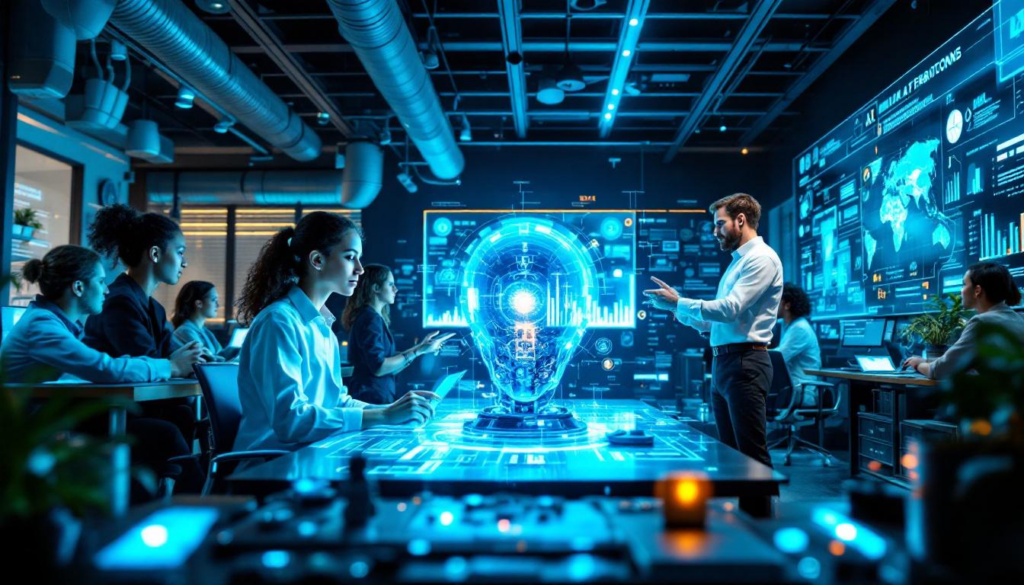
AI trends in 2026? We are on the cusp of a new era in business, where artificial intelligence (AI) is not just a buzzword, but a reality that is shaping the way we work, communicate and create value. In 2026, we will see a number of trends that will revolutionise industries and change the way we think about business strategy.
1. Automation of decision-making processes
Automation has already made its mark in many industries, but in 2026 we will see a significant increase in the use of AI for decision-making. This is not just about replacing human labour, but about improving the quality of decisions.

How will this affect management?
Managers will increasingly rely on data-driven insights to make strategic choices. AI will analyse large amounts of data faster than any human can, and provide recommendations based on patterns and trends. This will lead to more informed decisions and reduce the risk of errors.
Examples of industries that will benefit from this
- Finance: AI will predict market movements and help investors make smarter choices.
- Healthcare: Automated diagnoses will improve patient care and reduce waiting times.
- Manufacturing: Optimising supply chains will become more efficient with AI analytics.
2. Personalisation on a new level
Consumers today expect tailor-made experiences. By 2026, AI will make it possible to personalise products and services in ways we can scarcely imagine.
How does this work in practice?
By analysing user data, AI can predict what customers want before they even know it themselves. This could be anything from recommendations on online shops to tailored marketing campaigns. The result? Increased customer satisfaction and loyalty.
Sectors that will be affected
- Retail: Shops will be able to offer unique shopping experiences based on previous purchases.
- Travel: Destinations and activities will be tailored to individual preferences.
- Entertainment: Streaming services will provide recommendations tailored to each individual user.
3. Increased focus on ethics and accountability
With great power comes great responsibility. As AI becomes more integrated into business, ethical issues will become more pressing. By 2026, we will see an increase in demands for the responsible use of AI.
What does this mean for businesses?
Businesses must develop guidelines on how they use AI, particularly with regard to privacy and data protection. Transparency will be a key factor in building consumer trust.
Examples of ethical guidelines
- Use of anonymisation techniques to protect personal data.
- Implementation of algorithms that are free from bias.
- Openness about how data is collected and used.
4. AI-driven workplaces
The workplaces of the future will be characterised by AI. By 2026, we will see an increase in AI-driven tools that support employees in their daily tasks.

How will this change the working environment?
With AI as an integral part of work processes, employees will be able to focus more on creative and strategic tasks, whilst routine tasks are automated. This will not only increase productivity but also improve the working environment.
Sectors that will benefit from AI-driven tools
- Marketing: Automated campaigns and analytics will become the norm.
- HR: Recruitment and training will become more efficient with AI support.
- IT: System monitoring and troubleshooting will become more automated.
5. Collaboration between humans and AI
It is not a question of replacing humans, but of collaborating with AI. By 2026, we will see an increase in tools that promote collaboration between humans and AI.
What will this look like?
Tools that combine human creativity with AI analysis will become more widespread. These could range from design tools that suggest creative solutions to decision-making tools that provide insights based on data.
Examples of collaborative tools
- Design: AI-driven design tools that offer suggestions based on trends.
- Project management: Tools that analyse team performance and provide recommendations for improvement.
- Development: AI that helps programmers write more efficient code.
Frequently asked questions (Q&A)
1. How will AI affect jobs in the future?
AI will change job roles, but it will also create new jobs. Many routine tasks will be automated, giving employees more time for creative and strategic tasks.
2. What are the main benefits of AI in business?
The main benefits include increased efficiency, better decision-making, and the ability to personalise products and services.
3. How can businesses prepare for AI trends?
Businesses should invest in staff training, develop ethical guidelines for AI use, and implement AI-driven tools into their processes.
4. What are the risks of using AI in business?
The risks include privacy concerns, algorithmic bias, and dependence on technology. It is important to have guidelines for responsible use.
5. How can small businesses benefit from AI?
Small businesses can use AI to automate tasks, improve customer service, and analyse data for better decision-making. There are many cost-effective tools available.
Ready to take the leap into the future? AI isn’t just a trend; it’s a necessity for staying competitive. Let us help you navigate this exciting journey. Get in touch with us today to learn more about how we can support you in your digital transformation! 🚀
Are you ready to embrace AI and ensure your business not only survives but thrives in 2026? At Mediabooster, we have the tools and expertise you need to harness the power of artificial intelligence. Whether it’s AI & Automation, development & design, marketing, or content production, we can help you create scalable digital growth. Don’t let the future catch you off guard – book a meeting with us today and take the first step towards realising your business’s full potential!